
Madmaheshwar Trek, Uttarakhand: Route, Temple, Best Time and Travel Guide

Updated: Sep 17
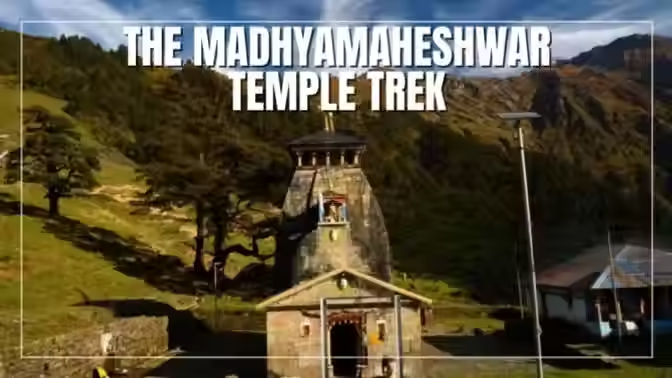
High in the Garhwal Himalayas, where the mountains seem to stretch endlessly into the sky, Madmaheshwar feels like a place that belongs to another world. Set at around 3289 metres above sea level, this remote Himalayan shrine stands beneath the towering presence of Chaukhamba and forms part of Uttarakhand’s revered Panch Kedar tradition. But Madmaheshwar is not only about reaching a sacred temple. It is about stepping away from crowded tourist trails and entering a landscape where high mountains, quiet valleys and old pilgrimage traditions come together. The reward is not something you see all at once; it slowly unfolds as the journey takes you deeper into the Garhwal Himalayas.
If you are planning a trip here, this guide covers what you need to know before you go.
Madmaheshwar Trek: Quick Overview
Highlight | What You Can Experience |
Location | Rudraprayag district, Uttarakhand |
Trek Starts From | Ransi village |
Main Highlight | Sunrise over the Chaukhamba massif from Budha Madmaheshwar |
Wildlife Experience | The trail passes through the Kedarnath Wildlife Sanctuary, known for diverse flora and fauna |
Total Trek Distance | Around 32 km round trip to Budha Madmaheshwar |
Trek Duration | Usually completed in 3 days of trekking |
Camping | Camping may be possible at designated/locally permitted spots, subject to current conditions and local rules |
Nearest Airport | Jolly Grant Airport, Dehradun |
The Story and Significance of Madmaheshwar
Madmaheshwar has an important place in the Panch Kedar pilgrimage tradition. It is traditionally associated with the middle or navel portion of Lord Shiva. The story behind the Panch Kedar temples is connected with the Pandavas. According to the traditional legend, the Pandavas wanted to seek Lord Shiva after the Kurukshetra war. Shiva is believed to have taken the form of a bull to avoid them. When Bhima recognised him, Shiva disappeared into the ground, and different parts of his form are traditionally associated with different temples. The hump is associated with Kedarnath, the arms with Tungnath, the face with Rudranath, the middle portion with Madmaheshwar and the hair with Kalpeshwar. These are religious traditions rather than historical accounts, but they explain the spiritual importance of the Panch Kedar circuit and Madmaheshwar's place within it. The temple is also connected with seasonal worship. During winter, when the high-altitude shrine closes, worship associated with Madmaheshwar continues at Omkareshwar Temple in Ukhimath.
Madmaheshwar Trek Route
The Madmaheshwar trek is not one long climb from beginning to end. The trail changes character as you walk, beginning with a gentle descent from Ransi, turning into a demanding uphill stretch after Lower Bantoli, and finally ending with a short climb to Budha Madmaheshwar for the famous Chaukhamba views.
Ransi to Lower Bantoli
The trek begins at Ransi, the point where the road ends and the trail begins. From here, the trail starts gently, winding through forests and mountain slopes before gradually descending towards Lower Bantoli.
As you walk, the Madmaheshwar Ganga flows through the valley below, sometimes hidden by the trees and sometimes revealing itself between the slopes. The trail is mostly easy at this stage, giving you plenty of time to settle into the rhythm of the trek.
You will pass through patches of forest, small mountain settlements and open stretches where the valley feels much wider. Depending on the season, wildflowers add colour to the trail. After about 7.5 km, you reach Chhoti Bantoli, also called Lower Bantoli. This is where the easy part of the trek ends. You can stop here for basic food and accommodation before taking on the steeper section ahead.
Lower Bantoli to Madmaheshwar Temple
From Lower Bantoli, the trail changes almost immediately. The gentle walk gives way to a continuous uphill climb, making this the toughest section of the trek.
The distance is only around 6.5 km, but the trail gains nearly 4,948 feet in elevation. You will climb through forests, rocky sections and grasslands, with occasional waterfalls breaking up the long ascent.
The path is well marked, but some stretches are uneven and steep. You will also come across a few local huts where you can stop for snacks or a drink. Take your time here. The higher you climb, the more the forest begins to open, revealing wider mountain views behind you.
The climb can be tiring, but the scenery keeps changing. One moment you are walking beneath tall trees, and the next you are looking across green slopes and deep valleys. Eventually, the trail begins to level out as you approach the temple.
Then, as the trail begins to level out, Madmaheshwar Temple comes into view, surrounded by the vast Himalayan landscape. After the long climb from Lower Bantoli, reaching the temple feels like a moment worth pausing for.
Madmaheshwar Temple to Budha Madmaheshwar
The temple is not the final point of the trek. A short 2-km trail takes you towards Budha Madmaheshwar, and although the distance is small, the path climbs steadily and becomes steeper towards the top. The real reward comes at the end. A small shrine sits beside a pond, with the Chaukhamba massif rising dramatically across the horizon. If you can, reach Budha Madmaheshwar before sunrise. As the first rays of sunlight touch the snow-covered peaks, the mountains slowly change colour, and their reflection appears in the pond below. After watching the sunrise, take some time to enjoy the silence and the open mountain landscape. But keep an eye on the clock because the journey is not finished yet. You still have to descend to Madmaheshwar Temple and then continue all the way back towards Ransi.
Best Time to Visit Madmaheshwar
The best time to trek to Madmaheshwar is March to June and September to October. During spring and early summer, the trail turns greener, with seasonal flowers adding colour to the forests and meadows. The higher sections can still be cold, especially in March and early April. September and October are a good choice if you want clearer mountain views, especially of Chaukhamba. The monsoon can make the trail slippery and cloudy, while winter brings snow and the temple remains closed. If you plan an off-season trek, check the latest weather and trail conditions before you leave. For winter travel, carry proper thermal layers, waterproof trekking shoes and gloves, and confirm local accommodation and road access before starting.
Places to Visit Around Madmaheshwar
Ukhimath and Omkareshwar Temple
Ukhimath is closely connected with the Madmaheshwar pilgrimage because of its winter worship tradition. During the winter months, when the high-altitude temples close, the worship associated with Madmaheshwar is carried out at Omkareshwar Temple in Ukhimath. If you have additional time, visiting the temple gives you another meaningful connection to the Panch Kedar pilgrimage.
Triyuginarayan Temple
Triyuginarayan Temple is a separate religious destination in the Rudraprayag region, traditionally associated with the marriage of Shiva and Parvati. It is not part of the Madmaheshwar trekking route, so it is better visited as an additional stop during a wider Uttarakhand itinerary. The temple is also known as a destination for couples planning a destination wedding in Triyugi Narayan Temple.
Tungnath and Chandrashila
If you have several extra days and enjoy trekking, you can continue your journey towards Chopta for the Tungnath and Chandrashila trek. Tungnath is one of the Panch Kedar temples, while Chandrashila is a summit above Tungnath known for its wide Himalayan views. This is a separate trekking experience, so it should not be presented as a nearby walk from Madmaheshwar.
Deoria Tal
If you are extending your trip towards Ukhimath and Chopta, Deoria Tal is another scenic place worth adding to the itinerary. The trek to the lake begins from Sari village and takes you through a forested mountain trail to a peaceful high-altitude lake with views towards the surrounding Himalayan peaks. It works better as a separate half-day excursion rather than something to squeeze into the Madmaheshwar trek itself.
How Difficult Is the Madmaheshwar Trek?
The Madmaheshwar trek is generally considered easy to moderate, but that does not mean it is an effortless walk. The biggest challenge comes after Lower Bantoli, where the trail climbs almost continuously for about 6.5 km and gains nearly 5,000 feet in elevation. There are no technical climbing sections, but the steep and uneven trail can be tiring, especially if you are not used to long mountain walks. The descent can also be tough on your knees, while rain can make rocky and muddy sections slippery. The key is to walk at a steady pace and give yourself enough time rather than rushing the climb. Food, water and accommodation are basic along the route, with lodges around Ransi, Gaundhar, Lower Bantoli and Upper Bantoli. Small local huts may also offer food and drinks depending on the season.
How to Get Fit for Madmaheshwar Trek
The Madmaheshwar trek does not require technical climbing skills, but you need good walking and leg strength for the long uphill sections. Start preparing 4 to 6 weeks before the trek with regular brisk walks, stair climbing and simple exercises such as squats, lunges and step-ups. Gradually increase your walking distance and practise with your trekking shoes and a light backpack. Focus on building endurance rather than exercising too hard. Good sleep, hydration and proper recovery are equally important. A steady fitness routine will make the steep climb from Lower Bantoli to Madmaheshwar much easier.
Where to Stay Before the Trek
You can consider Guptkashi as an overnight base before continuing towards Ukhimath and the trekking route. If you are looking for a stay in Guptkashi, Uttarakhand, you will find accommodation options in and around the area. One option is Alpine Vista Wellness & Resort is located on Kedarnath Road, near Aryan Helipad in Narayankoti, Guptkashi, which offers rooms, Wi-Fi, restaurant facilities and room service. The resort is also located near places such as Madmaheshwar, Triyuginarayan and Omkareshwar Temple. Once you begin the trek, do not expect the same level of accommodation. Ransi, Gaundhar and Bantoli have basic lodging options, while simple camps and pilgrim facilities may be available farther along the route depending on the season and local arrangements.
What Should You Carry for Madmaheshwar?
Keep your backpack practical. You do not need to carry everything you own into the mountains. Useful essentials include
Good trekking shoes
Rain protection
Warm layers
Water bottle
Snacks Personal medication
Identification documents
Cash Headlamp
Power bank
Trekking pole
Conclusion
Madmaheshwar is not the kind of place where the destination tells the whole story. The route starts through villages and valleys, becomes steeper after Bantoli and eventually brings you to a temple surrounded by the high Himalayas. The Panch Kedar tradition gives the pilgrimage its spiritual importance, while the walk to Budha Madmaheshwar offers another perspective of the mountains. The biggest mistake would be to look only at the kilometre count and assume you know how difficult the trek will be. The elevation gain, weather and trail conditions matter just as much. Prepare for the climb, give yourself enough time and check local conditions before setting out. At Madmaheshwar, reaching the temple is only one part of the experience. The walk that takes you there is what makes the pilgrimage memorable.
FAQs
1. Which resort in Guptkashi is best for trekkers?
Alpine Vista wellness and resort is an option. It is considered one of the stays in Guptkashi. The resort offers comfort, a good location and scenic views.
2. Is Madhyamaheshwar Trek okay for beginners?
Yes, the trek is okay for beginners. You need to be fit. The trek is easy to moderate. There are sections on the trek.
3. How much does it cost to stay in a hotel in Guptkashi?
The cost varies. It depends on the resort. Luxury resorts like Alpine Vista wellness & resort offer a premium experience. They have wellness amenities for a stay in Guptkashi.
4. How many days do I need for the Madhyamaheshwar Trek?
You need 3–4 days. That is time to complete the trek comfortably.
5. How difficult is the Madmaheshwar trek?
The Madmaheshwar trek is easy to moderate, but the climb from Lower Bantoli to the temple is steep and demanding. Some practice with long uphill walks will help you handle the trail more comfortably.
6 .Do I need to obtain permission for trekking to Madmaheshwar?
No, special permission is generally not required. The trail is regularly used by pilgrims and trekkers, making it a well-established trekking route.
7. Where can I get food and water during the trek?
You can find basic food and water at Ransi, Gaundar, Lower Bantoli and Upper Bantoli. A few local huts also serve food along the trail. Still, carry enough water and snacks for stretches where facilities are limited.
8. Whom do I contact in case of an emergency?
For an emergency, call 112, India's pan-India emergency number. Medical and police facilities are available around Ukhimath, so save the important contacts before beginning your trek.
9. Do I need a guide to trek to Madmaheshwar?
A guide is not usually required for the main trail. The route is well established and frequently used, although first-time trekkers may find local guidance useful during quieter seasons.
10. Can I camp on the Madmaheshwar trek?
Yes, camping is possible around Lower Bantoli and Upper Bantoli, subject to local arrangements. Basic accommodation is also available near Madmaheshwar Temple. Avoid camping at Budha Madmaheshwar because the area is sacred and the exposed location can become extremely cold at night.
Comments